
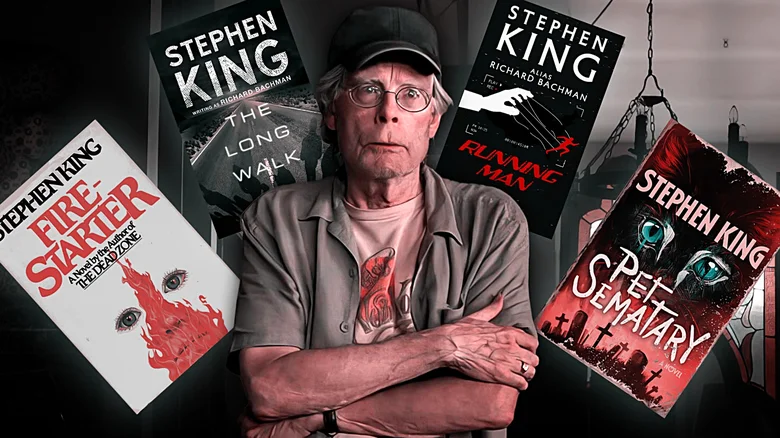
I still remember the first time I picked up a Stephen King novel. It was a battered old copy of Cell from my local library, and it left me absolutely gobsmacked. I’ve always loved apocalyptic fiction: the chaos, the breakdown of order, the terrifying glimpse of how fragile society really is; and King’s story felt like a door kicked open. Suddenly, I wasn’t just reading about destruction and survival, I was inhabiting it. His world swallowed me whole.
But more than the story itself, what struck me was the possibility that this kind of wild, strange, terrifying narrative could exist in print, and be embraced by millions. It meant there was space in the world for my dark stories too. Until then, I had carried the fear that the tales in my head were too odd, too dark, and too unconventional. But King’s writing, as I explored his works further, showed me that there was, in fact, an audience waiting for stories that don’t fit neatly into the commercial genre boxes.
That realization was the biggest turning point in my life because that was the point where I decided to try writing. And what followed after eight months of sweating over multiple drafts, rewrites, and killing my babies (pun definitely intended) was Deceived, my first novel.
Inspiration for Editing
As a self-taught writer, I began drinking in literature not just for fun but also to dissect the very thing that intrigued me so. I read everything from thrillers to romance, classic tales to contemporary stories in order to understand the mechanics of storytelling. Needless to say, I also devoured and relentlessly took notes from books on writing (as a craft.) Stephen King, in his memoir On Writing, famously said: “Write with the door closed, rewrite with the door open.” Those words made me realise that it wasn’t just the writing that mattered but also the revisions (or as now I understand it, editing.) Inspiration can pour onto the page with abandon, but it’s in the rewriting, the editing, that a story finds its true shape.
When I first started writing, I thought the hardest part would be finishing a manuscript. And yes, it is very, very hard to finish a draft. But finishing isn’t the same as completing. I learnt quickly that an unedited draft is only a skeleton. lacking flesh and bones. And that’s where editing comes in.
Even King, the master himself, isn’t immune to this process. His manuscripts have been cut, rewritten, and reshaped, sometimes brutally. The Stand exists in multiple versions because of the deep editorial work that went into refining it.
One of his strategies, the 10% rule in which after you finish a draft, you need to cut about 10% of what you wrote, is a gem of advice for over writers (writers who have a natural inclination to over write.) And that’s where editing really comes in. It doesn’t merely bring a fresh perspective with expertise but also a shrewd eye that won’t hesitate to cut off what’s not needed.
It’s one thing to dream up a haunted house, a cursed family, or a post-apocalyptic nightmare, but an entirely another thing to wrestle with pacing, cut unnecessary scenes, polish dialogue until it rings true, and make sure tension hums steadily through the narrative. Without editing, even the most brilliant idea risks being buried beneath clutter.
I know this firsthand, because my earliest drafts, though passionate, were often rambling and chaotic. It was through editing (first my own, later guided by editors and eventually as part of my professional career) that I learned how to bring clarity to a chaotic draft.
What Writers Can Take Away
Here’s what Stephen King taught me, and what I share with every writer I work with:
- The First Draft Is Supposed to Be Ugly: In On Writing, King compares the first draft to “shoveling out the sand so you can build castles later.” King always stressess on completing the first draft within a season (3-4 months). Too many writers stall because their beginning is not great or they feel like they will figure out the ending later. But that’s a trap. If you want to finish a book, first complete the first draft in a certain set timeframe no matter how bad your writing is because you work on the writing in the next draft, not in the first draft.
- Let the Story Rest: King sets manuscripts aside for weeks after completing the drafts before revisiting them. That distance lets him see flaws he’d missed in the heat of writing. I tried it and have never looked back! What had felt brilliant on day one sometimes sagged under fresh eyes. Remember, revising is not about ego, its about what works.
- Every Writer Needs an Editor: Even King has editors. Carrie only survived because Tabitha King pulled the draft out of the trash and told him to keep going. The Stand exists in multiple editions because of deep editorial cuts. A writer can never become a successful author without an editor’s help.
- The Reader Matters More Than You: King reminds us that writing is “telepathy”: what matters isn’t what’s on the page, but what the reader reads and feels. Editing is how we ensure that transfer happens without static. That’s why pacing, clarity, and ruthless cuts become so necessary It doesn’t matter if you think you’ve put the idea on the paper, what matters is how that idea can be communicated to the reader in the way it is intended.
- Kill the Adverbs: King is notorious for warning writers against adverbs: “The road to hell is paved with adverbs.” (On Writing, p. 125). This taught me that precision is power.
- Set a Daily Target: King writes 2,000 words a day (6-page-a-day), every day, even on holidays. That kind of discipline reminded me that consistency, not bursts of genius, builds books.
- Finish Fast, Revise Slow: King’s rule of finishing a draft in three months isn’t just about speed, it’s about energy. Stories lose heat if dragged out too long.
Stephen King’s books didn’t just give me thrills; they gave me permission to write the kind of stories that scared even me. Permission to believe that strange, dark voices had a place. And later, permission to wield the editor’s knife without fear.
His greatest lesson? Write fearlessly, edit ruthlessly. That’s how stories survive us.
And if you’re at the stage where your draft is ready to face the world but you’re not sure how to sharpen it, that’s where I come in. As a developmental and substantive editor, I help writers bring clarity, pace, and polish to their stories, so that their ideas don’t get buried under clutter.
If you’d like to explore how editing can transform your manuscript, let’s connect.

Leave a Reply